
Archive
Radius Gold Reports Expanded Multi-Element Geochemistry and Alteration Zoning at Tierra Roja Copper Project, Peru
 | |||||||||
 |  |  |  |  | |||||
November 23, 2026 – TheNewswire - Vancouver, British Columbia – Radius Gold Inc. (TSXV: RDU) ("Radius" or the "Company") is pleased to report results from an expanded multi-element geochemical program at its Tierra Roja copper project in southern Peru. The results define clear metal associations and a multi-kilometer hydrothermal footprint consistent with a multi-center intrusive complex that has been partially unroofed. The high-grade Core Zone shows strong sodic and potassic alteration and metal associations more typical of iron-oxide copper-gold or hybrid systems, and has been locally overprinted by structurally controlled higher-level epithermal fluids. The dataset comprises 887 unique surface rock-chip samples, including 151 recent samples analyzed by ALS Peru using four-acid digestion and ICP-MS (ME-MS61 + Au-ICP21), 74 samples from the 2024–2025 CERTIMIN campaign, and 662 historic 2015 samples.
Highlights
-
Positive correlations between copper and silver, molybdenum, bismuth, gold, tellurium and selenium.
-
Inverse relationships between copper and zinc, lead, barium and manganese, consistent with a copper-dominant core and a distal base-metal halo.
-
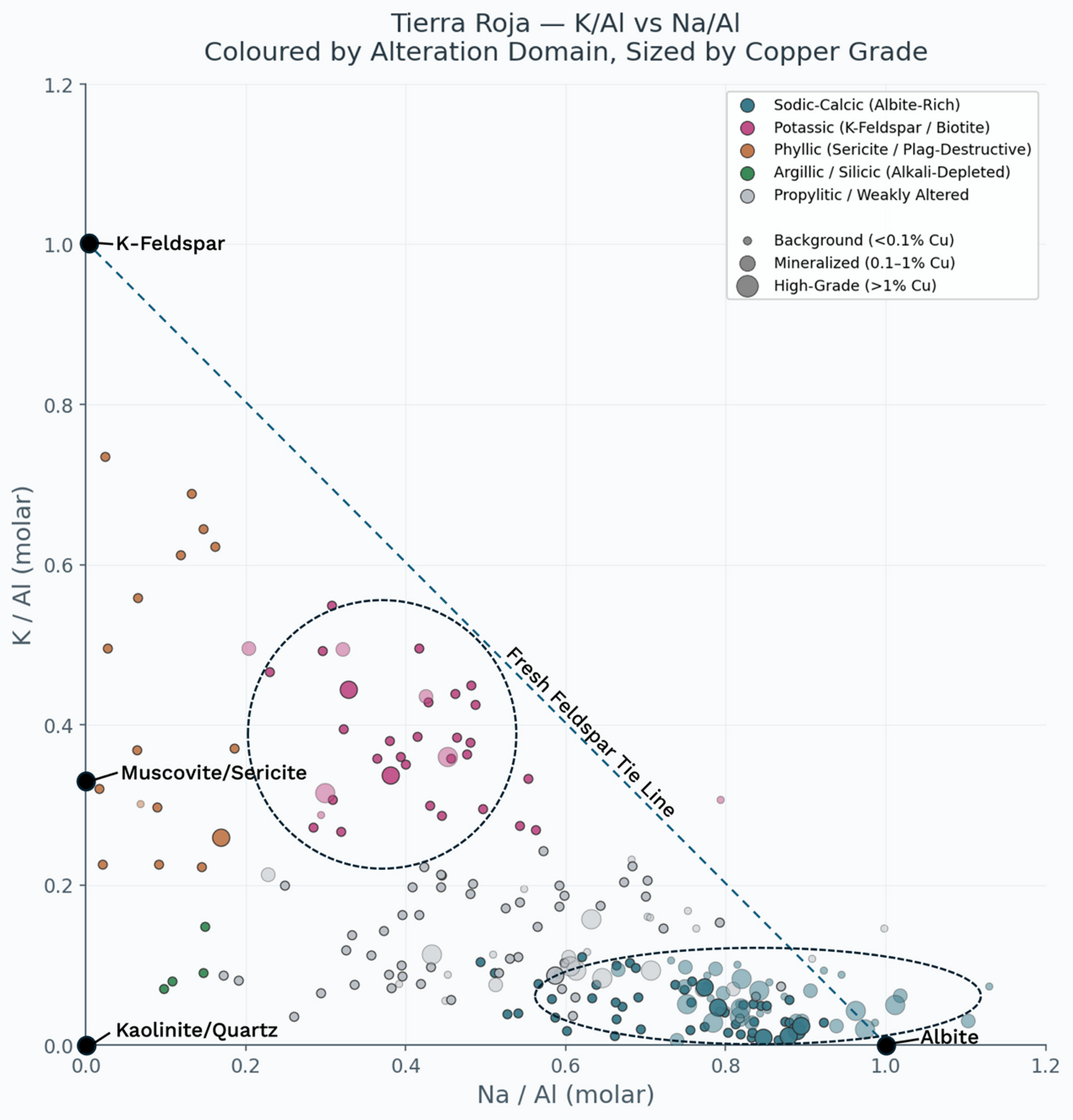
Whole-rock four-acid lithogeochemistry (K/Al and Na/Al molar ratios) outlines a zoned alteration architecture across a multi-kilometer footprint.
-
Systematic metal zoning from a copper-dominant Core Zone to proximal pathfinder enrichment (Mo, Bi, Te, Se, Ag) and a distal Pb–Zn halo.
-
Geochemical and alteration patterns indicate a multi-center intrusive complex with partially unroofed centers that display iron-oxide copper-gold or hybrid characteristics, locally overprinted by structurally controlled higher-level epithermal telescoping.
Sampling and analytical methods
In September 2026 the Company completed additional mapping and collected 151 rock samples from areas away from the high-grade Core Zone (where surface copper grades commonly exceed 2% Cu). These samples were analyzed by ALS Peru using four-acid digestion followed by ICP-MS (ME-MS61) and fire assay for gold (Au-ICP21). Results were compared with the 74 CERTIMIN samples from 2024–2025 and the 662 historic 2015 samples (total of 887 unique surface rock-chip samples).
Four-acid digestion provides near-total dissolution for most elements and is suitable for lithogeochemical ratio work (K/Al, Na/Al). Gold was determined by fire assay. The 2026 results have been verified against the laboratory certificates. The historic 2015 results have not been independently verified by the Company. Standard industry QA/QC protocols were followed by the laboratories; no material issues were identified in the 2026 certificates reviewed by the Qualified Person.
Results: Metal Associations
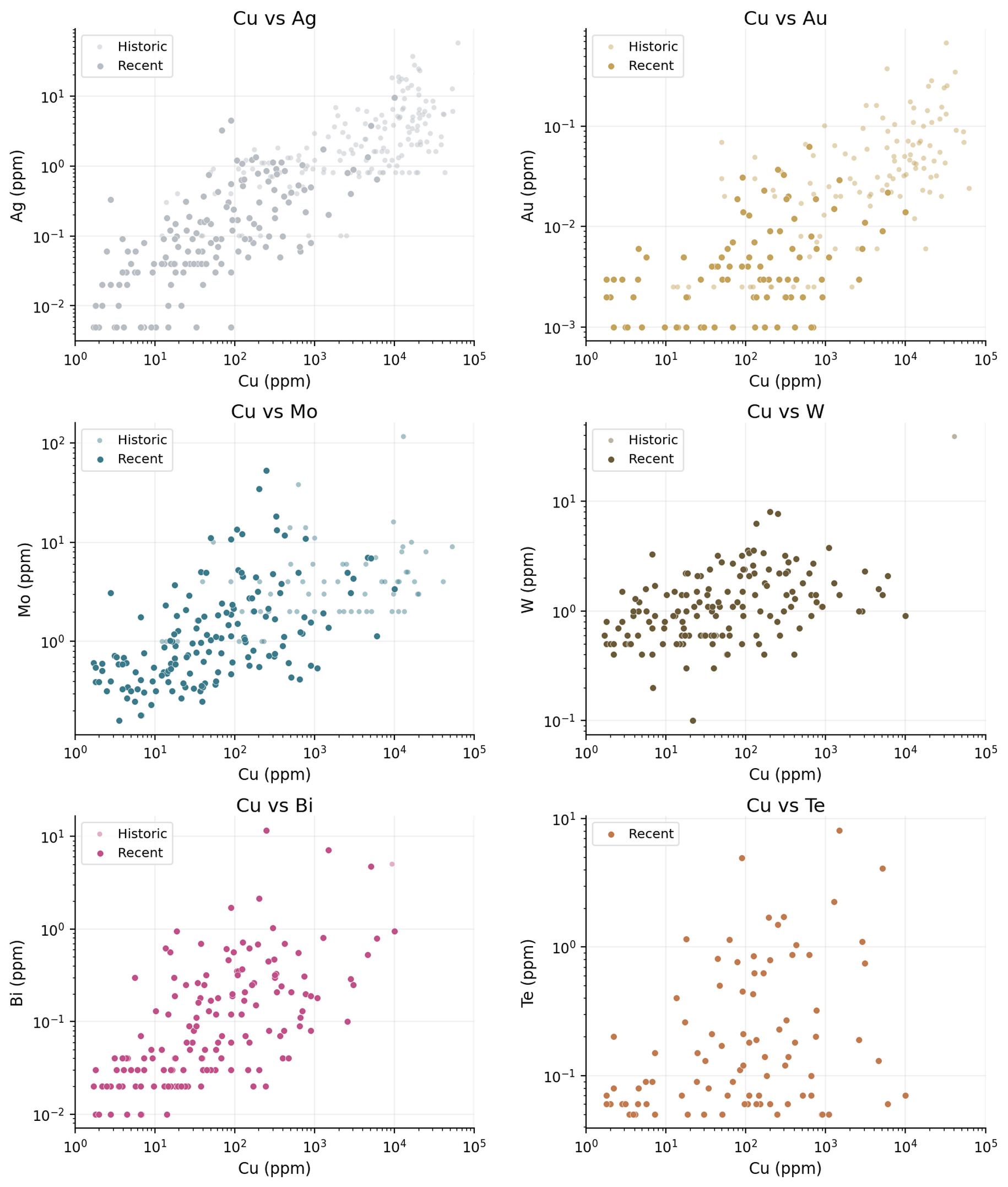
Scatter plots of the recent 151 ALS four-acid samples together with available historic data show clear positive correlations between copper and silver, molybdenum, bismuth, gold, tellurium and selenium (Figure 1). These associations are typical of porphyry copper systems and are strongest within the high-grade Core Zone.
Figure 1: Cu versus Ag, Au, Mo, W, Bi and Te (log scales). Solid symbols = recent ALS samples; transparent symbols = historic samples. Positive correlations are strongest in the higher-copper samples. Samples reported at the half lower limit of detection (constant values of 0.25 ppm Ag, 0.01/0.0005 ppm Au, 0.5 ppm Mo, 5 ppm W, 2.5 ppm Bi and 0.025 ppm Te) have been omitted for clarity.
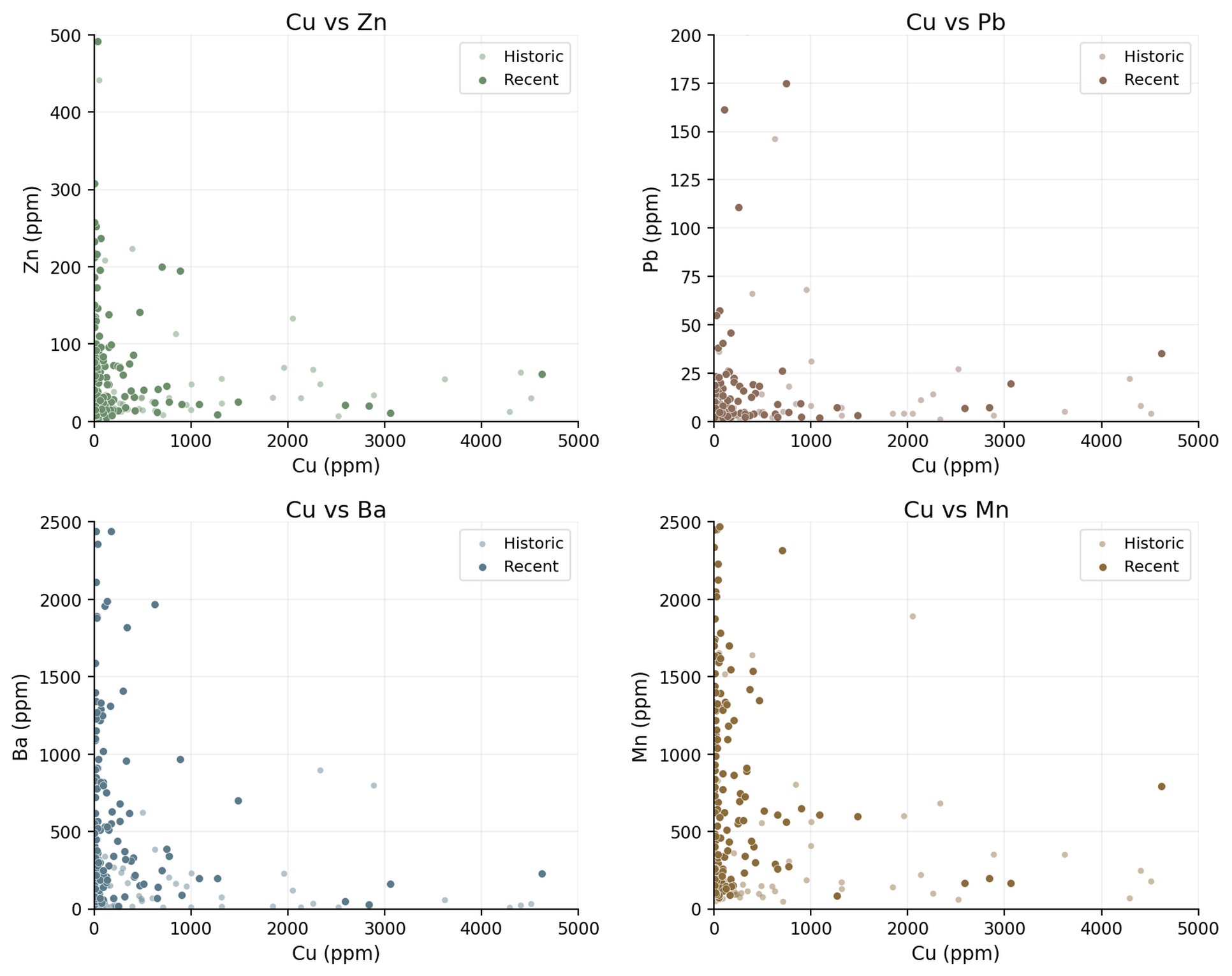
In contrast, copper shows inverse relationships with zinc, lead, barium and manganese (Figure 2).
Figure 2: Cu versus Zn, Pb, Ba and Mn (linear scales). Inverse relationships define a Cu-dominant core and a distal base-metal halo. Solid symbols = recent ALS samples; transparent symbols = historic samples.
Click Image To View Full Size
Spatial distribution
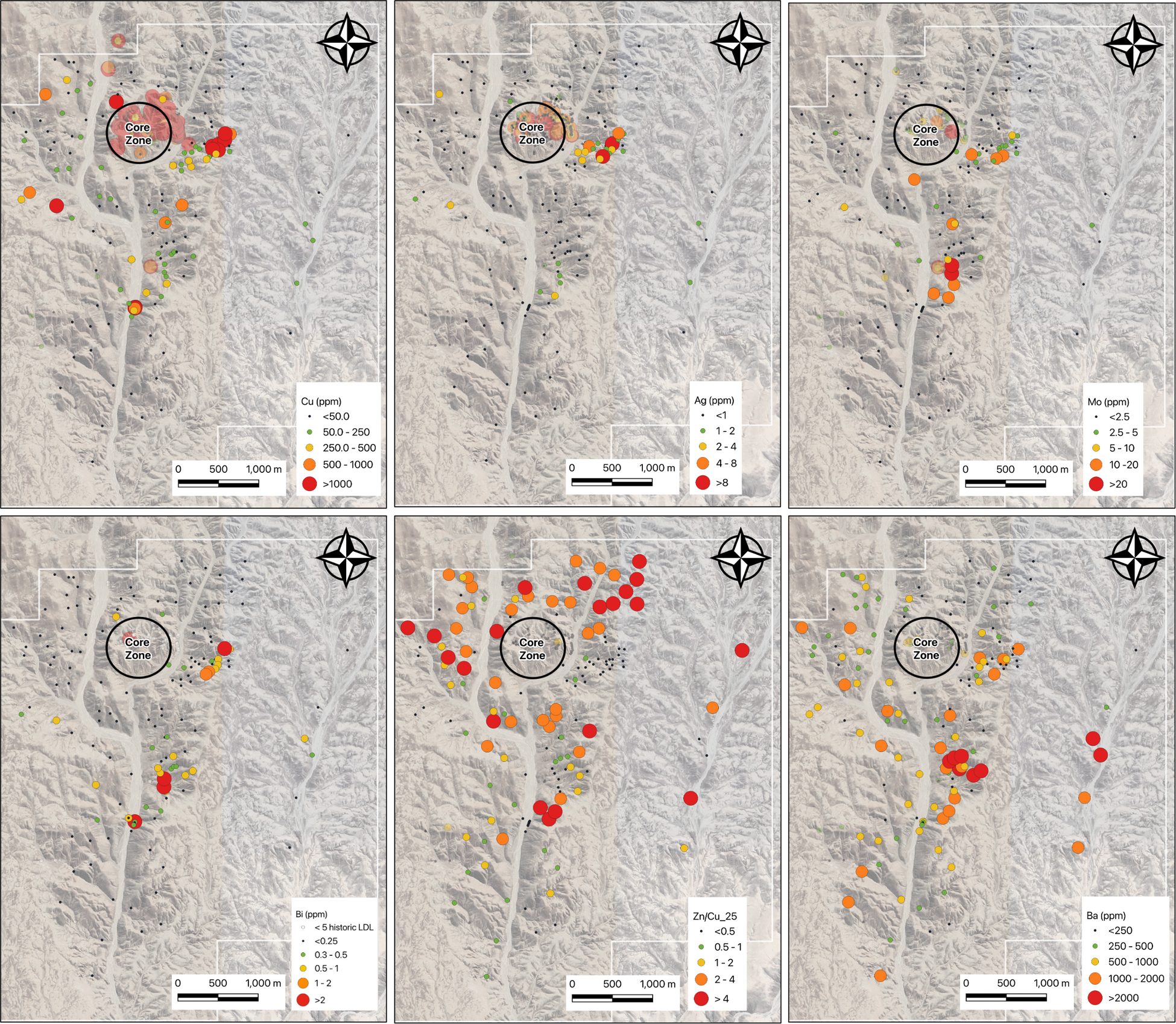
Maps of copper, silver, molybdenum, bismuth, the Zn/Cu ratio and barium illustrate the spatial expression of these associations (Figure 3). The highest copper grades form a coherent Core Zone. Proximal pathfinder elements (silver, molybdenum, bismuth, gold, tellurium and selenium) are concentrated in and around this zone. Zinc, lead, barium and manganese are depleted over the high-copper core and elevated on the periphery. These patterns define a copper-dominant core surrounded by a distal base-metal halo, typical of copper porphyry systems.
Figure 3: Spatial distribution of Cu, Ag, Mo, Bi, Zn/Cu and Ba. Note that Zn/Cu uses minimum zinc values normalized to 25 ppm to avoid artificially high ratios in samples with very low Cu. The Core Zone is outlined; pathfinder elements are proximal while the base-metal ratio and Ba form a broader halo. Solid symbols = recent ALS samples; transparent symbols = historic samples.
Click Image To View Full Size
Hydrothermal Alteration and Metal Zoning
Field mapping and surface rock-chip geochemistry indicate that the high-grade Core Zone (>2% Cu) forms part of a much broader, multi-kilometer hydrothermal footprint. Pervasive silicification, potassic alteration and elevated potassium (>4% K) can be traced more than 2.5 km to the southeast.
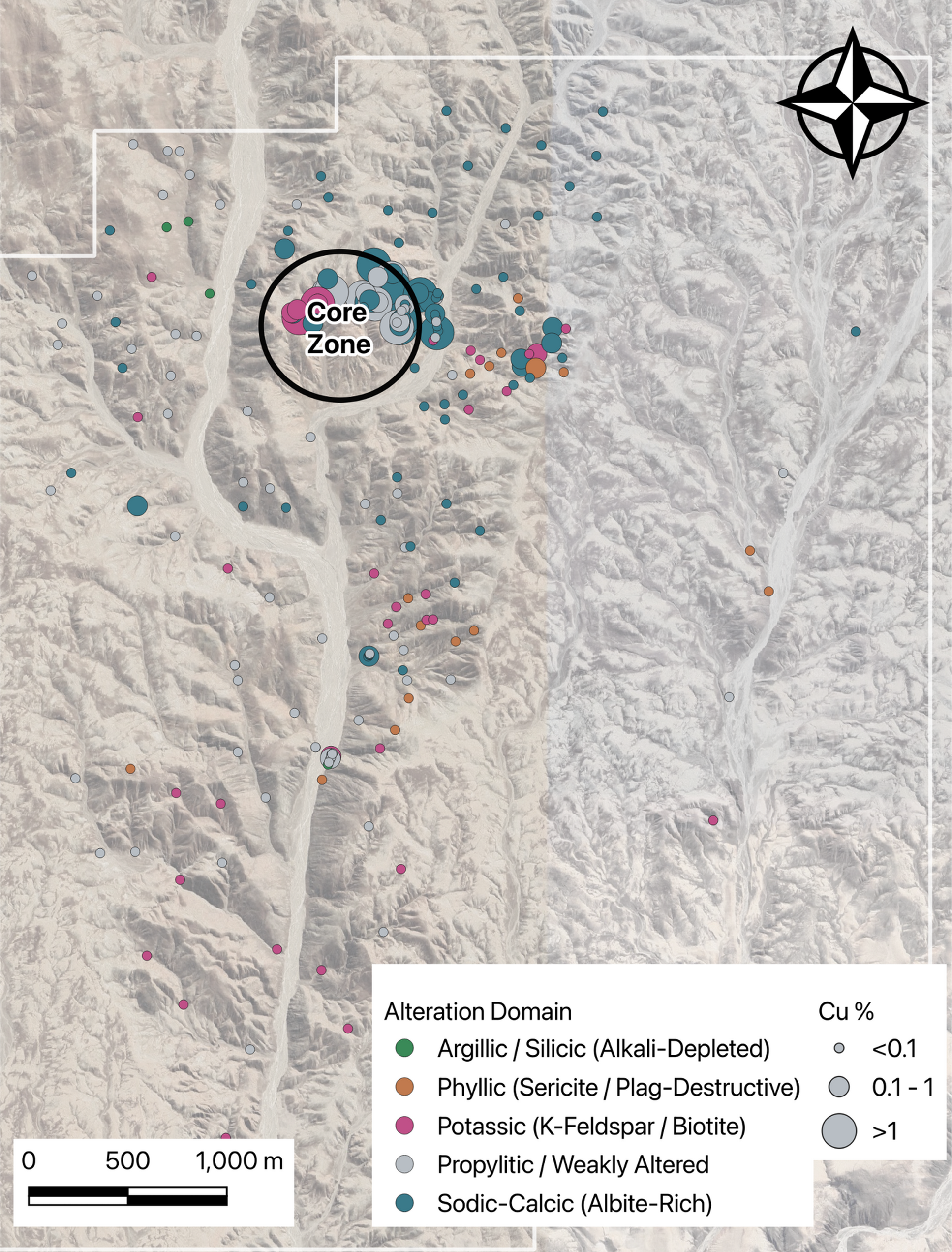
Whole-rock four-acid lithogeochemistry (K/Al and Na/Al molar ratios) outlines a zoned alteration architecture (Figures 4, 5). Intense sodic-calcic (albite-rich) alteration (Na/Al > 0.8) characterizes the high-grade Core Zone and its northeastern margin (Figure 5). This transitions southward and eastward into a 1.5–2.5 km corridor of strong potassic (K/Al = 0.40–0.74) and plagioclase-destructive phyllic (sericitic) alteration. The strong association of the highest copper grades with both sodic (albitic) and potassic alteration is more characteristic of iron-oxide copper-gold or hybrid systems than of a typical calc-alkaline porphyry, in which the highest copper grades are usually hosted by potassic alteration alone (e.g., Sillitoe, 2010; Williams et al., 2005).
Figure 4: K/Al versus Na/Al molar ratios colored by alteration domain and sized by copper grade. High-grade copper is associated with both sodic-calcic and potassic domains. Solid symbols = recent ALS samples; transparent symbols = historic samples.
Click Image To View Full Size
Figure 5: Map of alteration domains defined by K/Al and Na/Al molar ratios. Symbol sizes reflect copper grades.
Click Image To View Full Size
Arsenic and antimony – late structural overprint
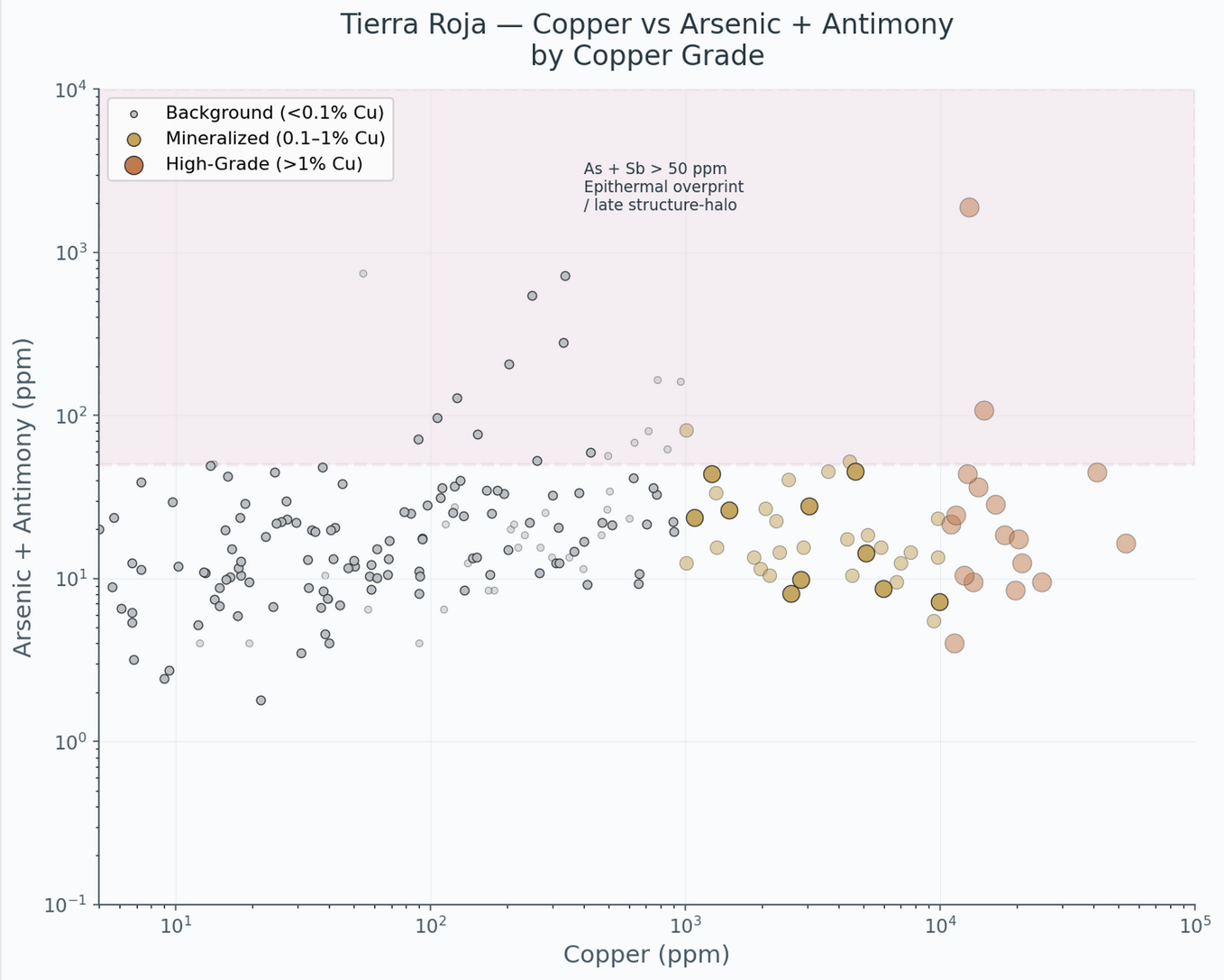
A plot of copper against arsenic plus antimony shows that the main high-grade copper core is largely free of arsenic-antimony overprinting (Figure 6). Eighty-eight percent (15 of 17) of samples grading ≥1.0% Cu contain ≤50 ppm As+Sb (median 18.5 ppm).
Figure 6: Cu versus As + Sb (log scale) with the >50 ppm As + Sb field highlighted. Solid symbols = recent ALS samples; transparent symbols = historic samples.
Click Image To View Full Size
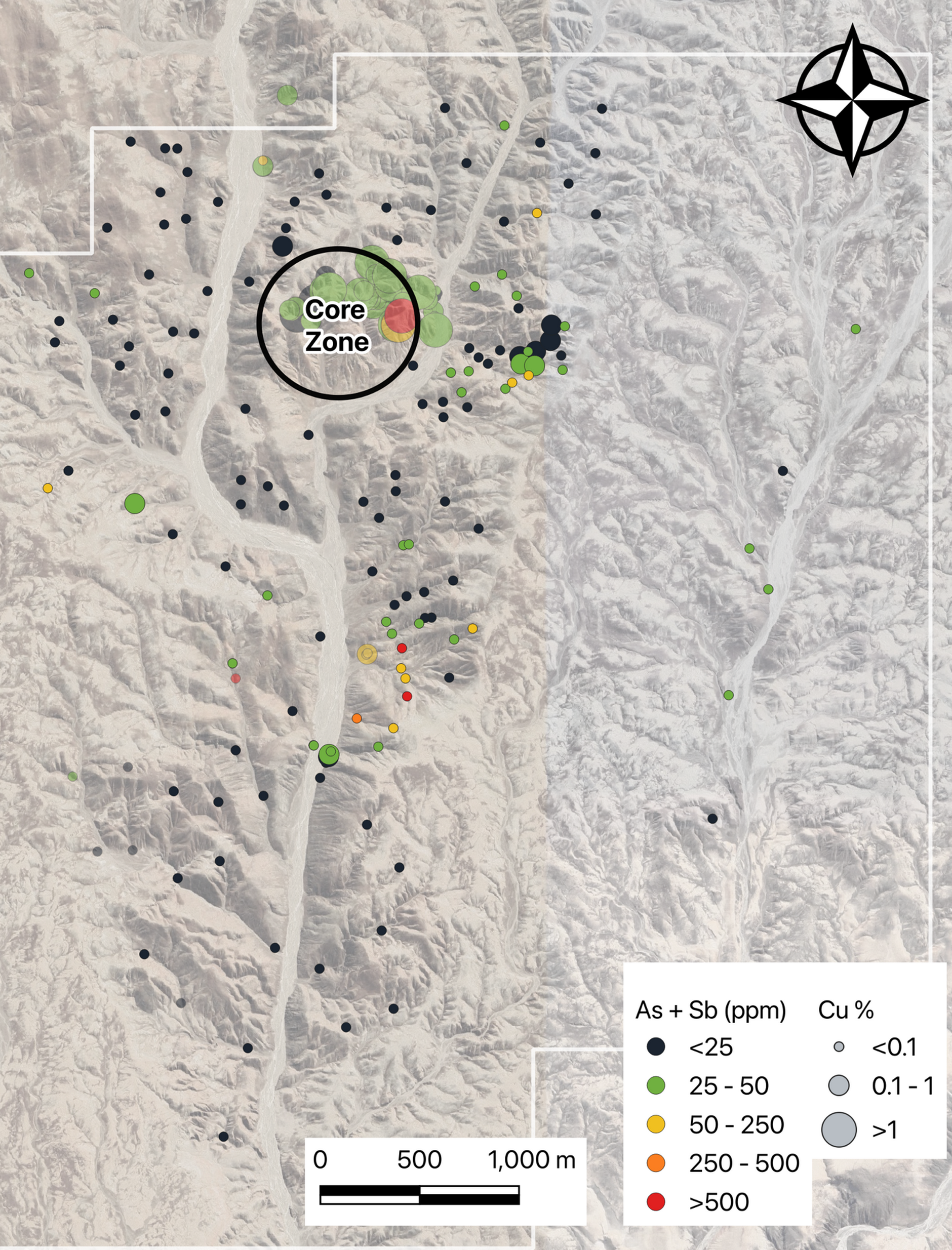
A discrete population returns strongly elevated As + Sb (165 to 1,892 ppm), including one sample of 1.30% Cu with 1,892 ppm As + Sb on the eastern margin of the Core Zone and a cluster of anomalies approximately 1.8 km to the south (Figure 7). Elevated arsenic and antimony of this type are characteristic of cooler, higher-level intermediate- to high-sulfidation epithermal fluids. They are interpreted to mark late structural overprints or distal halos rather than the primary copper-bearing assemblage, and provide vectors to higher-level conduits that may overlie or flank the main mineralized system.
Figure 7: Map showing possible late structural corridors defined by elevated As+Sb. Symbol sizes reflect copper grades. Solid symbols = recent ALS samples; transparent symbols = historic samples.
Click Image To View Full Size
Additional geochemical observations supporting a hybrid or IOCG affinity
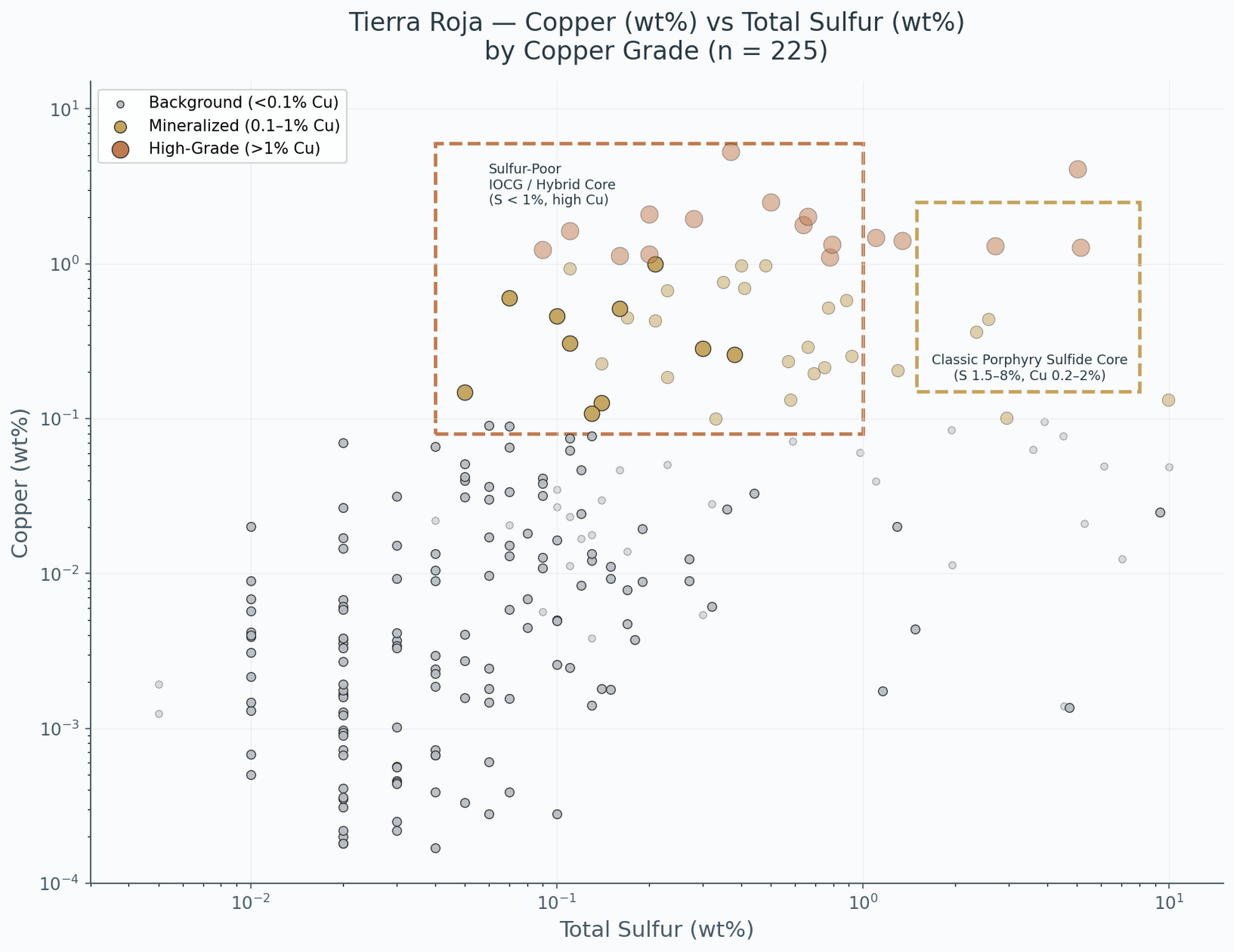
Copper grades at Tierra Roja are predominantly associated with low total sulfur (Figure 8). Surface rock-chip samples containing more than 0.1% copper are mostly sulfur-poor (majority below 1% S; median approximately 0.4% S for samples above 1,000 ppm copper). Because the samples are from the oxide zone, some or all of this sulfur depletion may result from weathering and leaching of primary sulfides rather than from a primary low-sulfur hypogene assemblage. The observation is therefore consistent with, but not diagnostic of, a sulfur-poor iron-oxide copper-gold or hybrid system.
Figure 8: Cu (wt%) versus total S (wt%) with fields for a classic porphyry sulfide core (higher S) and a sulfur-poor IOCG/hybrid core (low S, high Cu). Solid symbols = recent ALS samples; transparent symbols = historic samples.
Click Image To View Full Size
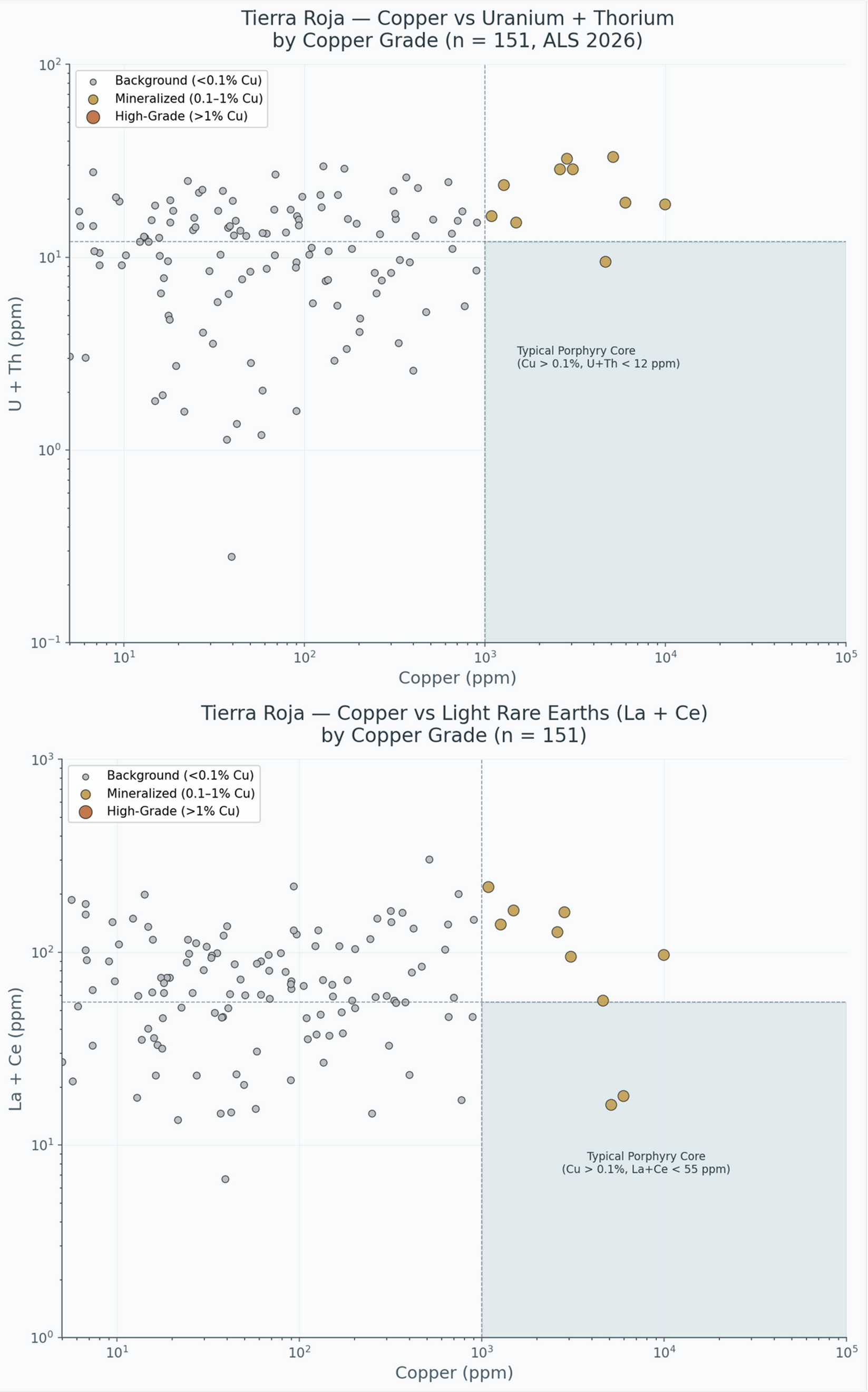
The same higher-copper samples are enriched in light rare earth elements and uranium-plus-thorium (Figure 9). Of the samples above 1,000 ppm copper, most contain more than 55 ppm lanthanum plus cerium (mean approximately 109 ppm) and more than 12 ppm uranium plus thorium (mean approximately 23 ppm). These elevated values sit outside the low-LREE and low-U+Th field expected for a typical calc-alkaline porphyry core. Co-enrichment of copper with lanthanum, cerium, uranium and thorium is characteristic of oxidized, high-salinity fluids capable of transporting these elements together, a feature recognized in iron-oxide copper-gold and hybrid systems (Williams et al., 2005; Groves et al., 2010). Comparable metal associations occur in other coastal Andean IOCG and hybrid deposits in southern Peru.
Figure 9: Cu versus U + Th and Cu versus La + Ce (recent ALS samples). Higher-copper samples are enriched in both LREE and U+Th relative to a typical porphyry core. Solid symbols = recent ALS samples; transparent symbols = historic samples.
Click Image To View Full Size
Interpretation and targeting
The geochemical and alteration patterns indicate a multi-center intrusive complex that has been partially unroofed. The high-grade Core Zone is characterized by strong sodic-calcic (albite-rich) alteration (Na/Al molar ratios commonly greater than 0.8) coexisting with potassic alteration, and by the highest copper grades. This association of copper with intensely alkaline, albite-rich rocks is more typical of iron-oxide copper-gold or hybrid systems than of a conventional calc-alkaline porphyry, in which the highest copper grades are usually hosted by potassic alteration alone (Sillitoe, 2010; Williams et al., 2005).
The same higher-copper samples are also enriched in light rare earth elements (lanthanum plus cerium commonly above 55 ppm) and uranium plus thorium (commonly above 12 ppm). These elevated values lie outside the low light-rare-earth and low uranium-thorium field expected for a typical calc-alkaline porphyry core and are consistent with oxidized, high-salinity fluids capable of transporting copper together with light rare earth elements and uranium-thorium (Williams et al., 2005; Groves et al., 2010). Surface samples from the oxide zone are predominantly sulfur-poor (most below 1% S). While some of this sulfur depletion is likely the result of weathering and leaching of primary sulfides, the combination of low sulfur with high copper, strong sodic-calcic alteration, and elevated light rare earths and uranium-thorium is consistent with a primary high-tenor, relatively sulfur-poor mineralization style.
Taken together, the multi-kilometer footprint of sodic-calcic and potassic alteration, the copper-dominant core with proximal pathfinder enrichment (silver, molybdenum, bismuth, tellurium and selenium), the distal base-metal halo, and the local structurally controlled arsenic-antimony overprint support a partially unroofed multi-center system with iron-oxide copper-gold or hybrid affinities that has been overprinted, at least locally, by cooler higher-level epithermal fluids. These patterns provide clear vectors for further exploration of both the deeper unroofed centers and the structural corridors that may overlie or flank them.
“These results are extremely encouraging,” said Luke Longridge, President. “The high-grade Core Zone shows strong copper grades with metal and alteration associations indicative of iron-oxide copper-gold or hybrid systems, and we are excited to test this target in the upcoming drill campaign. The same dataset also points to additional intrusive centers and structural corridors extending several kilometers to the east and south, marked by potassic alteration and elevated pathfinder elements. A large portion of the property remains unsampled as it is covered by caliche; percussion or other shallow drilling through that cover will be an important next step to delineate these broader centers and refine our targeting across the property.”
Qualified Person
Luke Longridge, PhD, P.Geo., is the President of Radius and is Radius’s Qualified Person as defined by National Instrument 43-101 – Standards of Disclosure for Mineral Projects. Dr. Longridge has reviewed and approved the technical information contained in this news release. The 2026 assay results have been verified against the laboratory certificates. The 2024–2025 CERTIMIN results from the core zone were previously reported in the Company’s news release of 9 September 2026 and were reviewed by the Qualified Person at that time. The historic 2015 results have not been independently verified by the Company.
References
-
Groves, D.I., Bierlein, F.P., Meinert, L.D. and Hitzman, M.W., 2010. Iron oxide copper-gold (IOCG) deposits through Earth history: implications for origin, lithospheric setting, and distinction from other epigenetic iron oxide deposits. Economic Geology, 105, 641–654.
-
Sillitoe, R.H., 2010. Porphyry copper systems. Economic Geology, 105, 3–41.
-
Williams, P.J., Barton, M.D., Johnson, D.A., Fontboté, L., de Haller, A., Mark, G., Oliver, N.H.S. and Marschik, R., 2005. Iron oxide copper-gold deposits: geology, space-time distribution, and possible modes of origin. Economic Geology 100th Anniversary Volume, 371–405.
About Radius Gold Inc.
Radius Gold Inc. is an exploration company focused on the discovery and advancement of high-quality projects in the Americas. The Company’s strategy is to identify, acquire and advance exploration opportunities with strong discovery potential.
ON BEHALF OF THE BOARD
Simon Ridgway
CEO and Chairman
Radius Gold Inc.
1111 Melville Street, Suite 1000
Vancouver, BC V6E 3V6, Canada
Tel: 604-801-5432; Toll free 1-888-627-9378; Fax: 604-662-8829
Email: info@goldgroup.com
Website: www.radiusgold.com
Neither the TSX Venture Exchange nor its Regulation Services Provider (as that term is defined in the policies of the TSX Venture Exchange) accepts responsibility for the adequacy or accuracy of this release.
Forward-looking statements
Certain statements contained in this news release constitute forward-looking statements within the meaning of Canadian securities legislation. All statements included herein, other than statements of historical fact, are forward-looking statements and include, without limitation, statements about the interpretation of surface geochemical and alteration patterns at the Tierra Roja project, the potential for deeper porphyry or iron-oxide copper-gold style mineralization, and the Company’s plans for further exploration. Often, but not always, these forward-looking statements can be identified by the use of words such as “expect”, “expects”, “expected”, “anticipate”, “anticipates”, “anticipated”, “plan”, “plans”, “planned”, “intend”, “intends”, “intended”, “estimate”, “estimates”, “estimated”, “potential”, “open”, “future”, “assumed”, “projected”, “aimed”, “prioritizing”, “to be”, or statements that events, “could” or “should” occur or be achieved and similar expressions, including negative variations.
Forward-looking statements involve known and unknown risks, uncertainties and other factors which may cause the actual results, performance or achievements of the Company to be materially different from any results, performance or achievements expressed or implied by forward-looking statements. Such uncertainties and factors include, among others, changes in general economic conditions and financial markets; the Company not having the financial ability to meet its exploration goals; risks associated with the results of exploration activities, the geology, grade and continuity of mineralization; unanticipated costs and expenses; weather and seasonal conditions; the timing of receipt and interpretation of assay results; and such other risks detailed from time to time in the Company’s interim and annual filings with securities regulators and available under the Company’s profile on SEDAR+ at www.sedarplus.ca.
Forward-looking statements contained herein are based on the assumptions, beliefs, expectations and opinions of management, including but not limited to: that there will be no material adverse change affecting the Company or its properties; and that further exploration, if undertaken, will proceed as planned. Forward-looking statements are made as of the date hereof and the Company disclaims any obligation to update any forward-looking statements, whether as a result of new information, future events or results or otherwise, except as required by law. There can be no assurance that forward-looking statements will prove to be accurate, as actual results and future events could differ materially from those anticipated in such statements. Accordingly, investors should not place undue reliance on forward-looking statements.
